

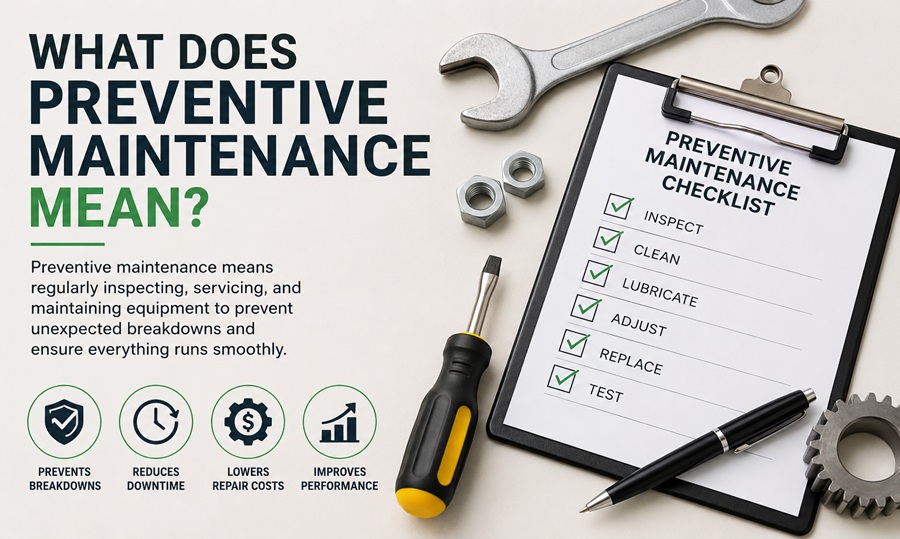

Preventive maintenance means servicing your car on a regular schedule to prevent problems before they happen, rather than waiting for something to break and fixing it after the fact. It includes routine tasks like oil changes, fluid checks, filter replacements, tire rotations, and brake inspections, done at set mileage or time intervals regardless of whether anything currently seems wrong.
The idea is simple: catching small issues early is almost always cheaper and safer than dealing with a full breakdown later.
The Problem With Skipping Maintenance
Cars rarely fail all at once without warning. Most breakdowns are the end result of a small issue that went unaddressed for months or years. A slow oil leak becomes engine damage. A worn belt becomes a stranded car on the highway. A neglected transmission fluid change becomes a transmission replacement that costs thousands more than the fluid service would have.
Reactive maintenance, fixing things only after they break, tends to cost more overall, causes more inconvenient breakdowns, and shortens the life of the vehicle. Preventive maintenance flips that pattern by catching wear before it turns into failure.
What Does a Preventive Maintenance Checklist Include?
A typical preventive maintenance schedule covers these core items:
- Oil and filter changes — every 5,000-7,500 miles for most modern engines, though this varies by vehicle and oil type
- Tire rotation — every 5,000-8,000 miles to promote even wear
- Brake inspection — checked at every oil change, pads replaced as needed
- Air filter replacement — every 12,000-15,000 miles
- Fluid checks — coolant, brake fluid, power steering fluid, and transmission fluid
- Battery testing — especially once the battery passes the 3-year mark
- Belt and hose inspection — checking for cracks, fraying, or leaks
- Spark plug replacement — typically every 30,000-100,000 miles depending on plug type
Your owner’s manual has the manufacturer’s specific recommended schedule, which is the most accurate source for your exact vehicle.
What Is the Difference Between Preventive and Reactive Maintenance?
Preventive maintenance happens on a schedule, before a problem shows up, based on mileage or time intervals. Reactive maintenance happens only after something breaks or a warning sign appears, like a dashboard light or a strange noise. Preventive maintenance is generally cheaper over the vehicle’s lifespan because it catches issues while they’re still minor and inexpensive to fix.
How Often Should You Do Preventive Maintenance?
Most preventive maintenance follows either a mileage schedule or a time schedule, whichever comes first. A typical pattern looks like this:
- Every oil change (roughly every 5,000-7,500 miles): oil, filter, brake and tire check
- Every 15,000-30,000 miles: air filter, cabin filter, more detailed fluid checks
- Every 30,000-60,000 miles: spark plugs, transmission fluid, coolant flush
- Annually, regardless of mileage: battery test, wiper blades, belt and hose inspection
Vehicles driven less frequently still need time-based maintenance, since some fluids and rubber components degrade with age even without heavy mileage.
Does Preventive Maintenance Actually Save Money?
Yes, and the math is usually pretty clear-cut. A basic oil change costs somewhere around $50-$100 in most areas. An engine that fails from oil neglect can cost $4,000-$8,000 to replace or rebuild. A brake fluid flush runs around $100-$150, while worn-out calipers from contaminated fluid can run several hundred dollars more to fix. The pattern repeats across almost every system in the car: the preventive service is a fraction of the cost of the repair it prevents.
There’s also a less obvious savings angle — vehicles with documented maintenance histories tend to hold higher resale value, since buyers and dealers trust a well-maintained car more than one with an unclear service history.
Local Insight: How Climate Affects Maintenance Needs
Where you live changes which preventive maintenance items matter most. In hot climates, air conditioning systems work harder and battery life shortens due to heat accelerating internal degradation, making AC checks and more frequent battery testing worthwhile. In cold climates, battery performance drops in freezing temperatures, and coolant/antifreeze levels need closer attention to prevent freezing damage to the engine block. Coastal areas with salt air or regions that use road salt in winter should also prioritize regular undercarriage inspections to catch rust before it spreads to critical components.
Getting Started With a Preventive Maintenance Routine
If you don’t currently follow a schedule, the easiest starting point is your owner’s manual, which lists manufacturer-recommended intervals for your specific vehicle. Many repair shops and dealerships also offer maintenance tracking, sending reminders based on mileage. Keeping a simple log, even a basic note on your phone with dates and mileage for each service, makes it much easier to stay consistent and spot patterns over time.
Frequently Asked Questions
Is preventive maintenance the same as scheduled maintenance?
They’re closely related. Scheduled maintenance usually refers to the specific intervals set by the manufacturer, while preventive maintenance is the broader concept of servicing a vehicle proactively, which scheduled maintenance is one part of.
How much does preventive car maintenance cost per year?
For an average vehicle driven normally, annual preventive maintenance typically runs $400-$800, covering oil changes, filters, fluid checks, and routine inspections, though this varies by vehicle age and driving habits.
What happens if you never do preventive maintenance?
Skipping preventive maintenance doesn’t guarantee immediate failure, but it significantly increases the risk of expensive breakdowns, shortens the vehicle’s overall lifespan, and can void certain warranty protections if the manufacturer’s required maintenance isn’t documented.