
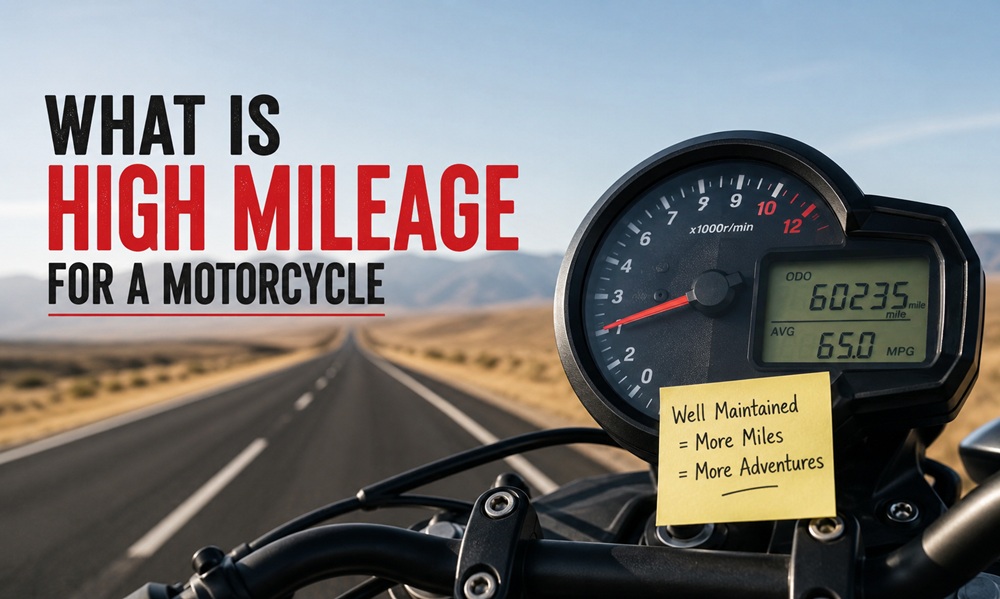

For most motorcycles, anything over 20,000 to 25,000 miles is considered high mileage, though this varies by type. Cruisers and touring bikes with larger, lower-revving engines can often handle 50,000 miles or more, while smaller sportbikes that see frequent high-RPM use may start showing wear closer to 20,000 miles.
Mileage alone doesn’t tell the whole story. A well-maintained bike with 40,000 miles can be in better shape than a neglected one with 10,000 miles. Knowing what to check matters more than the number on the odometer.
Quick Checklist Before Buying a High Mileage Motorcycle
Use this checklist when inspecting a used bike with significant mileage:
- Review maintenance records, especially oil changes and valve adjustments
- Check chain and sprocket wear if chain-driven
- Listen for unusual engine noise at idle and under throttle
- Inspect tires for uneven wear, which can signal suspension issues
- Check for oil leaks around gaskets and seals
- Test the clutch for slipping or grabbing
- Verify the title matches the odometer reading
What Is Considered High Mileage by Motorcycle Type?
Mileage expectations vary a lot depending on engine design and how the bike is typically ridden. Here’s a general breakdown:
| Motorcycle Type | High Mileage Threshold | Typical Lifespan |
| Sportbikes | 20,000-25,000 miles | Up to 50,000 with care |
| Cruisers | 30,000-40,000 miles | 60,000-100,000 miles |
| Touring Bikes | 50,000-60,000 miles | 100,000+ miles |
| Dirt/Off-Road | 5,000-10,000 hours | Varies by terrain use |
Detailed Guide: Why Mileage Affects Different Bikes Differently
Sportbikes are built for performance, which often means higher RPM operation and tighter tolerances. This can lead to faster wear on components like valves and piston rings compared to a cruiser engine designed for relaxed highway cruising.
Touring bikes, like Honda Gold Wings or Harley-Davidson Road Glides, are engineered for long-distance reliability. These engines often run at lower RPMs for extended periods, which puts less stress on internal components over time. It’s common to see touring bikes well past 100,000 miles still running strong.
How Many Miles Can a Motorcycle Engine Last?
With consistent maintenance, most motorcycle engines can reach 80,000 to 100,000 miles or more before needing major work. The biggest factor isn’t the mileage itself but whether oil changes, valve checks, and other service intervals were followed consistently.
Should You Buy a High Mileage Motorcycle?
A high mileage bike can be a smart purchase if it has a documented service history and passes a thorough inspection. The savings on purchase price often outweigh the risk, especially for touring and cruiser models known for long engine life.
Tips for Buying or Owning a High Mileage Bike
Ask the seller for service receipts, not just verbal assurance. A bike with consistent oil changes every 3,000 to 5,000 miles tends to outlast one with sporadic maintenance, even at the same odometer reading.
Get a pre-purchase inspection from a mechanic who specializes in motorcycles if you’re unsure how to evaluate engine condition yourself. This typically costs $75 to $150 and can save you from a costly mistake.
If you already own a high mileage bike, stay ahead of maintenance rather than reacting to problems. Replacing wear items like chains, sprockets, and brake pads proactively keeps the engine and drivetrain working together properly, which extends overall lifespan.